Blog
Deep dives into email security, AI agent infrastructure, and the future of machine-readable messaging.
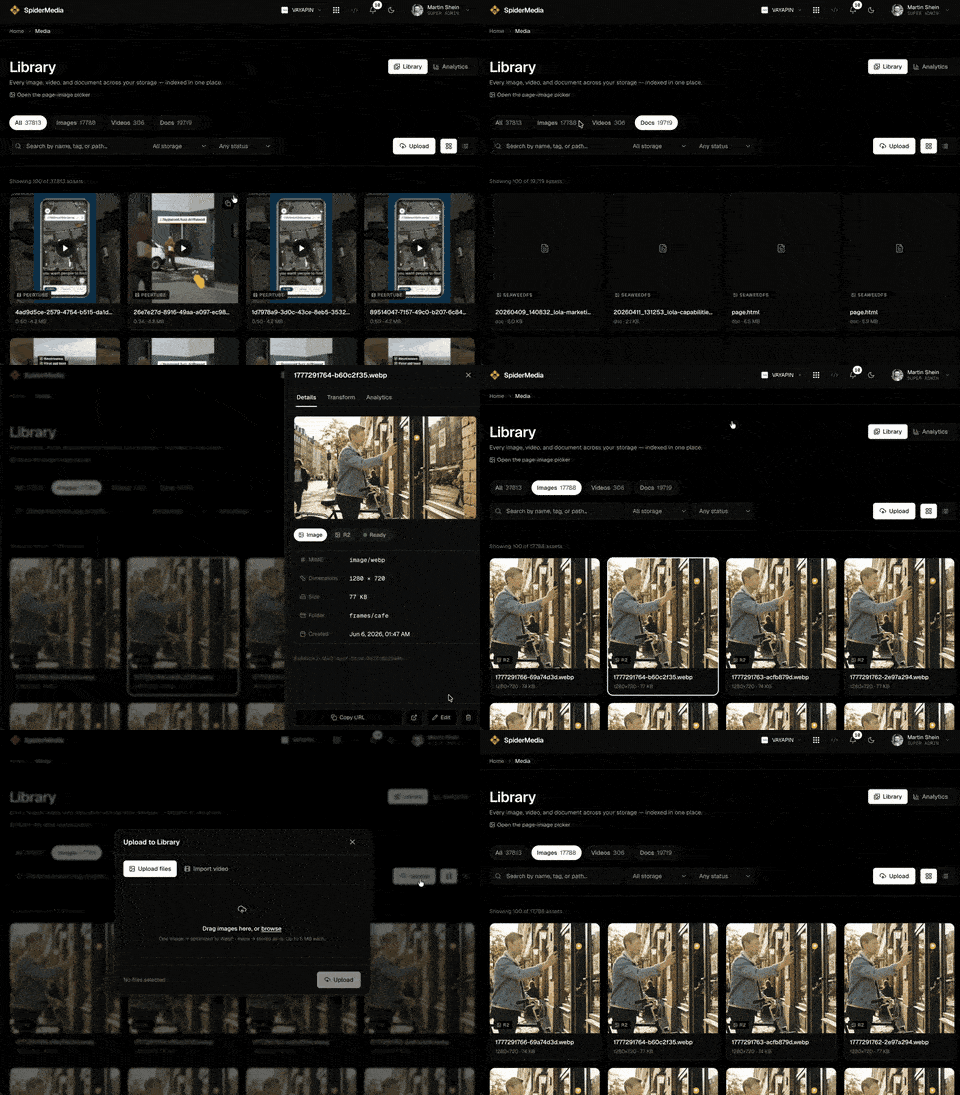
Email images that just work: host, resize, and optimize your campaign media in SpiderMedia
One reliable home for every campaign image and video, with the resizing, formatting, and CDN hosting email actually needs — plus analytics on the video your emails drive.
 Martin Shein

Your cold outreach shouldn't burn someone else's inbox placement
Sending reputation attaches to a domain, and it does not transfer. So a shared sending pool quietly couples every tenant's inbox placement to every other tenant's worst sender. SpiderMail's send tier now lets you bring your own domain: you publish three DNS records, I read them back, and the domain sends for you and nobody else.
Martin Shein

Your agent reads your inbox. So does everyone who can email you.
SpiderMail scans every stored message for prompt-injection technique before an agent reads it. Since February it has looked at 247,846 messages and held back 108. Then I opened the quarantine to screenshot it, and found a book club reminder. Here is the honest count, and the two regexes that caused it.
Martin Shein

Three outreach tools, one health grid — so a dead sender can't hide
Connect Smartlead, lemlist or Instantly to SpiderMail and every sending account lands in one deliverability grid. Including the warmup that paused itself weeks ago and never told you.
Martin Shein

Connect a mailbox, import the last 500 — not the last ten years
Connecting a mailbox used to import the whole archive, with no way to say no. Now you choose how much history to bring — and the older mail is never requested at all.
Martin Shein
45 Methods, One Skill: How We Taught Agents to Run SpiderMail
The MCP gave your agent 46 tools. The new mail-skills package gives it the recipes — and teaches the three traps that bite every email agent.
Martin Shein